Fluxilla
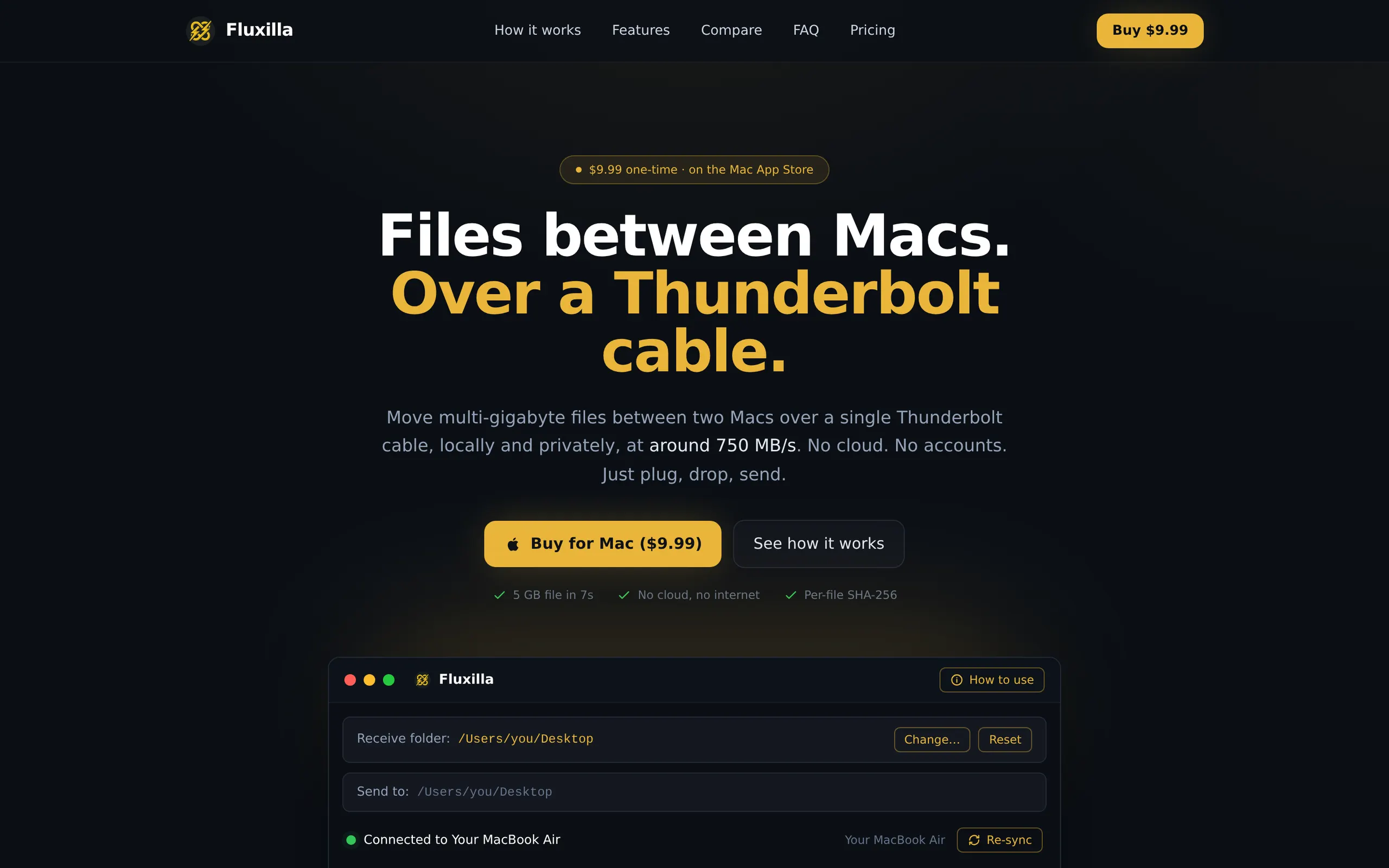
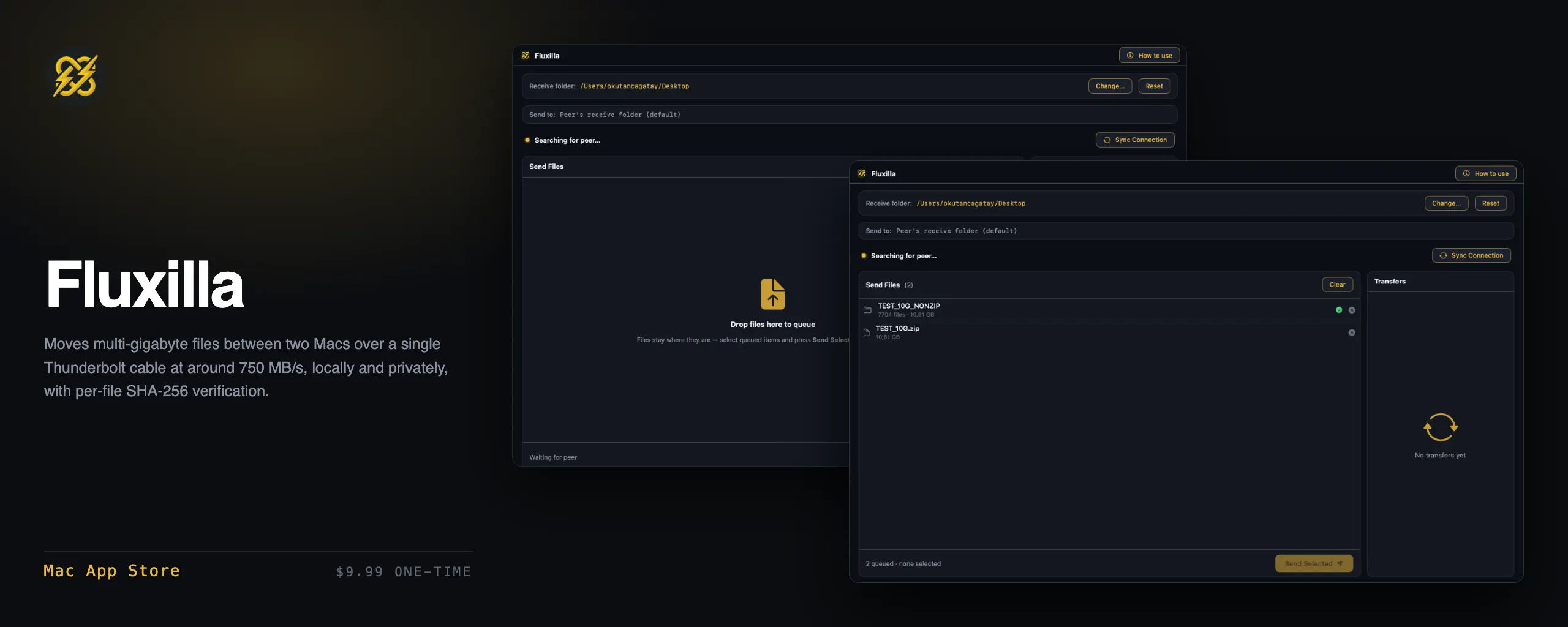
Moves multi-gigabyte files between two Macs over a single Thunderbolt cable at around 750 MB/s, locally and privately, with per-file SHA-256 verification.
- Client
- In-House
- Year
- 2026
- Role
- Design and build
- Category
- Software / Development
- Scope
- My own product · Mac App Store · Desktop app
- Stack
- Swift · SwiftUI · Bonjour · TCP · Thunderbolt
- Live
- fluxilla.com ↗
- Skills
- Claude Code
- Creative Direction
Fluxilla is a native macOS app, Swift and SwiftUI, on the Mac App Store. It moves files between two Macs over a Thunderbolt cable and nothing else.
It came out of my own problem. I change machines often, and every time I did, moving render output between two Macs meant building a Thunderbolt bridge by hand, then sharing a folder over it, then pushing everything through SMB. Several minutes of setup for two machines sitting on the same desk.
The app takes that over. Install it on both Macs, connect them with a Thunderbolt 3 or later cable, and it scans the bridge interface, advertises and finds the peer over Bonjour, and opens a TCP connection across it. When a laptop sleeps or a cable gets knocked, Re-sync on either side tears that down, rediscovers and is back inside a second.
The decisions that matter are all about folders, because that is where the alternatives fall over. Drop one and Fluxilla walks it in the background, builds a manifest, and sends the whole thing as a single batch over the one connection. Nothing is zipped first, and it reports one progress row and one ETA. Transfers run strictly one at a time, which keeps that ETA honest and stops the receiver fragmenting writes across parallel streams. Every file carries a SHA-256 check.
That comes to around 750 MB/s. A 5 GB file lands in about seven seconds, and a 10 GB folder of 7,000 small files in about 28. The small-file case is the one that separates it: AirDrop runs at 30 to 50 MB/s on that shape of work, and cloud sync is slower again, because every tiny file becomes its own HTTP request. Against wired Ethernet the same 750 sits above Gigabit at 118, 2.5GbE at 290 and 5GbE at 580, and below 10GbE at 1180. 10GbE wants cards at both ends and a switch between them. This wants the cable already in the drawer.
I built the application with Claude Code, and fluxilla.com, the Astro site that sells it. I use it every time I set up a new machine.